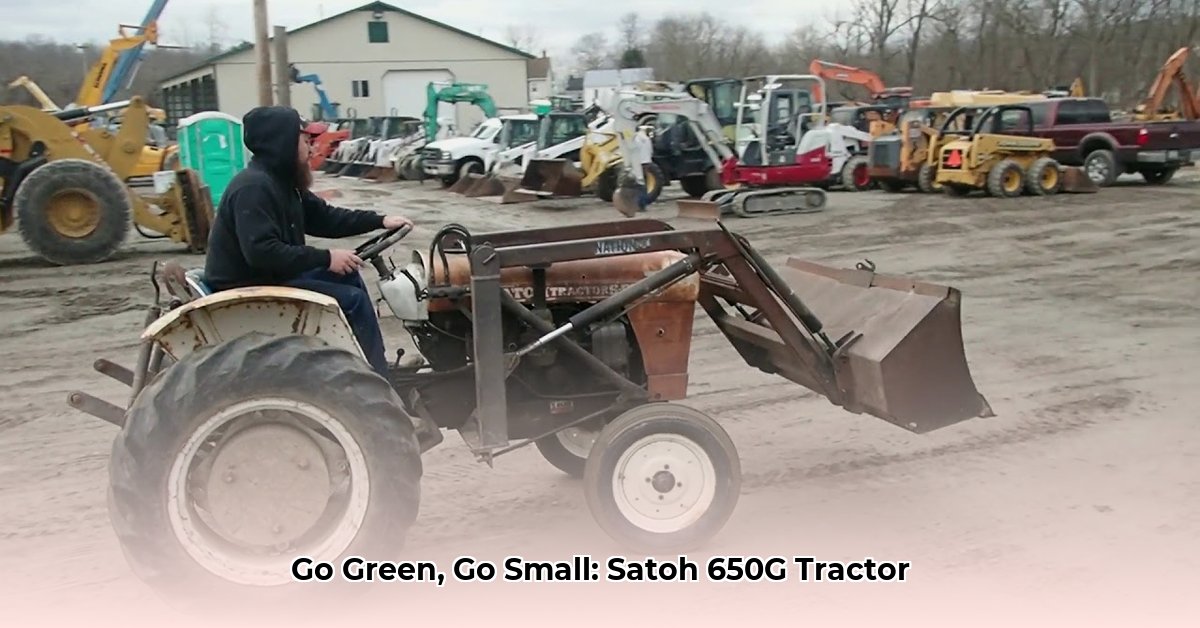
Thinking about adding a used Satoh 650G tractor to your small farm operation? This classic machine offers a compelling blend of affordability and ruggedness, but it's crucial to understand its strengths and weaknesses before making a decision. For more information on Satoh tractors, check out this helpful resource: Satoh Tractor Info. This guide will help you navigate the complexities of owning a Satoh 650G, especially within the context of sustainable small-scale farming practices.
The Allure of Affordability: A Tempting Entry Point
The Satoh 650G's primary appeal lies in its relatively low purchase price. Used models are significantly cheaper than newer tractors, a huge advantage for farmers operating on tight budgets. Their reputation for durability adds to their allure; many have provided years of faithful service. However, this low upfront cost shouldn't overshadow potential long-term expenses. Owning a classic tractor is similar to owning a classic car – it requires a different approach to maintenance and repair than modern machinery.
The Parts Predicament: A Potential Headache
Here's where the Satoh 650G's age becomes a factor. Sourcing replacement parts can be a significant challenge. Imagine needing a critical engine component—a scenario that could transform a budget-friendly purchase into a costly repair. Even seemingly routine maintenance like a clutch replacement might prove far more expensive than anticipated, significantly impacting your farm's bottom line. This is particularly crucial for sustainable farming, where cost control is paramount. The cost of downtime alone could negate any initial savings.
On-Farm Performance: Matching the Machine to Your Needs
The Satoh 650G's two-wheel-drive (2WD) configuration is another key consideration. Will it handle your specific soil conditions effectively? Heavy clay soils, for example, could prove challenging. The lack of power steering and predominantly manual controls will also demand more physical effort from the operator, leading to increased fatigue, potentially higher fuel consumption, and possibly more soil compaction – all counterproductive to environmentally conscious farming practices. It is crucial to assess whether the trade-offs in features outweigh the lower initial investment. Modern tractors often offer significant improvements in time and fuel efficiency.
Assessing the Risks: A Realistic Look Ahead
To facilitate a well-informed decision, let's examine potential challenges and mitigation strategies in a risk assessment matrix:
| Factor | Likelihood of Trouble | Potential Impact | Mitigation Strategies |
|---|---|---|---|
| Engine Problems | Relatively High | Significant | Regular preventative maintenance, diligent inspections, consider engine rebuild options. |
| Parts Shortages | Relatively High | Moderate | Build a parts stockpile, explore alternative sourcing (e.g., online forums, salvage yards), familiarize yourself with basic repair techniques. |
| Hydraulic System Issues | Moderate | Moderate | Preventative maintenance, strategic planning for potential repairs. |
| Traction Limitations (2WD) | Moderate | Low to Moderate | Careful task selection, consider adding wheel weights for improved traction. |
| Manual Steering | Low | Low | Proper training, task selection appropriate for manual steering. |
Making an Informed Decision: A Step-by-Step Guide
Before committing, consider the following:
- Define Your Needs: What specific tasks will the tractor perform? Are the 650G's limitations compatible with your farming practices? Realistic assessment of workload is key.
- Get a Thorough Inspection: A pre-purchase inspection by a qualified mechanic is non-negotiable. This professional evaluation will identify hidden issues and prevent costly surprises.
- Secure a Parts Supply: Research parts availability proactively. Develop a sourcing strategy, including potential alternative parts or repair methods.
- Budget Wisely: Include repair and maintenance costs in your budget. Account for potential downtime and lost productivity resulting from repairs.
- Compare Options: Research newer tractors, even if their initial cost is higher. Compare long-term ownership costs, fuel efficiency, and environmental impact. Consider leasing as an alternative.
The Satoh 650G can be a valuable asset for some small farms, but understanding its limitations is crucial. In sustainable agriculture, minimizing unexpected expenses and maximizing efficiency are paramount. Carefully weigh the pros and cons to ensure the tractor aligns with your long-term goals and risk tolerance. This isn’t a decision to be taken lightly. Careful consideration will go a long way to ensuring a successful and sustainable farming operation.
Key Takeaways:
- The Satoh 650G’s affordability necessitates careful planning for potential repair and maintenance costs.
- Pre-purchase inspection is essential for identifying potential problems and estimating repair costs.
- A comprehensive budget should include ongoing maintenance, parts acquisition, and potential downtime.
- Total Cost of Ownership (TCO) analysis is crucial for comparing the Satoh 650G to modern alternatives.
- The environmental impact, especially fuel efficiency, should factor into the decision-making process.